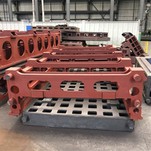
F'ħafna workshops, robot ma jistax jaħdem tajjeb jekk il-passaġġ li jiċċaqlaq tiegħu ma jkunx stabbli. Ferrovija ta' Gwida Awtomatizzata tagħti lir-robot rotta tal-ivvjaġġar dritta u kkontrollata. Jintuża ma 'linji gwida, sliders, unità tas-sewqan u sistema ta' kontroll. Is-sistema tgħin lir-robot jiċċaqlaq bejn il-punti tax-xogħol mingħajr ma tħawwad jew tieqaf spiss wisq.
Il-binarji ta 'gwida awtomatizzati jiżguraw moviment lineari preċiż fil-manifattura. Dan huwa importanti għax-xogħol ta 'wweldjar, tagħbija, bexx u assemblaġġ. F'dawn l-impjiegi, ir-robot ħafna drabi jeħtieġ li jirrepeti l-istess triq ħafna drabi kuljum. Żball żgħir ta 'pożizzjoni jista' jaffettwa l-wiċċ tal-parti, il-linja tal-weldjatura jew il-punt tat-tagħbija. Ferrovija stabbli tista 'żżomm il-moviment ċar u faċli biex tikkontrolla.
The rail can be used in long production lines. It can also work with heavy loads when the frame and drive parts are selected correctly. In some plants, other support parts are also used near the line. For example, a pipeline thermal insulation bracket may be installed for pipe work, while the rail system is used for robot travel. Each part has its own job, and clear layout helps the whole area run better.
When choosing the rail, users should check load, stroke, speed and positioning accuracy. Regular lubrication is also needed. The gear rack, motor and slider should be checked after long use. If the rail is installed level and the control setting is correct, the robot can move in a stable way for daily production.